Key Points in the Design of Landscape Lighting for Historic Buildings
Table of Contents
Introduction
China’s historic buildings are an important part of the country’s historical and cultural heritage, embodying millennia of civilizational memory and artistic legacy. Lighting, as a vital means of showcasing the nighttime appearance and artistic charm of historic buildings, is becoming increasingly important. How to uncover and showcase the allure of historic buildings at night while respecting and preserving them is a topic that every lighting designer must give deep consideration to. Lighting for historic architecture is not merely about “illuminating”; rather, it involves using the language of light and shadow to allow these structures to continue expressing their vitality at night, based on an understanding of architectural culture and respect for their historical integrity. The following systematically outlines the core principles of landscape lighting design for historic architecture from six perspectives.

1. Fully Embodying the Characteristics of Historic Architecture and Emphasizing the “Antiquity”
Chinese historic architecture differs fundamentally from modern architecture in terms of layout, form, color, and materials. Its unique timber-frame system, three-part facade (base—main body—roof), upturned eaves, and strict hierarchical forms collectively constitute a distinctive architectural vocabulary. Therefore, the lighting techniques, color schemes, and luminaire designs used in nighttime illumination should all emphasize the characteristics of historic architecture, striving to accurately convey its unique cultural significance and artistic value.
The prerequisite for design is “understanding the architecture.” As some scholars have pointed out, the formal rules of Chinese historic architecture are strict and unique, with each architectural component conveying a specific meaning. The first task for lighting designers is not “creation” but “research”—researching the architectural features of the era, hierarchical regulations, and the texture of materials, and gaining a deep understanding of its design philosophy. Only then can they set the right direction for the design. Lighting should serve to “evoke a sense of nostalgia,” allowing viewers to feel the depth of history through light and shadow, rather than having their attention diverted from the architecture itself by dazzling lights.
2. Precise Use of Light to Highlight Layers and Details
The core of lighting for historic architecture lies in using variations in brightness and color to both highlight the building’s contours and vividly showcase the characteristics of decorative details—such as bracket sets and colored paintings—thereby creating an optimal sense of layering and three-dimensionality.
Gradation of brightness is fundamental. In Chinese historic architecture, the clear distinction between the three sections—the roof, the body of the building, and the plinth—is of utmost importance. Research based on subjective evaluation experiments has shown that the harmony between the brightness of the main structure and the ambient light, as well as the brightness ratios among different parts of the building, directly affect the viewer’s visual comfort. The curves of the roof, the dynamic lines of the overhanging eaves, the dougong brackets and columns on the building body, and the carvings on the plinth must be distinguished through different brightness levels to create a visual effect characterized by “a clear distinction between primary and secondary elements, and the interplay of solid and void.”
Lighting techniques must be tailored to the specific site. The industry has identified six core techniques, among which “flood lighting” is considered an effective method for conveying the three-dimensionality of historic architecture, as it effectively restores the building’s sense of volume. For intricate components such as bracket sets, techniques such as backlighting or installing small fixtures in close proximity can be used to emphasize their three-dimensionality through the interplay of light and shadow, rather than simply “washing” them with distant floodlights. For roofs, narrow-beam spotlights can be used to highlight the ridge, ridge-end ornaments, or the upturned corners of the eaves, creating a “crowning touch,” rather than uniformly illuminating the entire roof surface—leaving the roof appropriately in shadow actually serves to accentuate the rich layering of the space beneath the eaves.
Reflections on the “outline highlighting” technique. For a long time, the practice of “outlining contours with bright lines” has been quite common in the lighting of historic buildings. However, industry experts generally agree that this technique lacks expressive power and tends to reduce the building to a “glowing skeleton,” failing to effectively showcase the building’s layers, details, and colors. A more recommended approach is to combine “outline highlighting” with “flood lighting” to avoid the harsh appearance caused by purely linear light strips.

3. Strictly Adhering to Luminance Standards and Scientific Quantification in Design
The surface materials of historic buildings (such as blue bricks, gray tiles, and wood) have relatively low reflectivity; if designed according to conventional illuminance standards, it is often difficult to achieve the desired visual brightness. Therefore, industry experts recommend that designing based on luminance standards is a more scientific approach.
Specific luminance guidelines are as follows: For heritage buildings that need to preserve a sense of historical patina, luminance should be kept at a lower level—for example, 5–15 cd/m² for the corner towers of the Forbidden City—to create a “historical grayscale” effect. For commercial buildings designed in an antique style, luminance may be moderately increased to 20–30 cd/m², though excessive brightness should still be avoided. Experts emphasize that the illuminance of historic buildings should be kept within 1.5 times that of the surrounding environment to prevent them from becoming glaring visual distractions. Excessively high illuminance not only disrupts the historic atmosphere of the buildings but also causes light pollution, creating a stark contrast with the cultural environment in which they are situated.
4. Selection of Light Sources and Fixtures: Color Rendering, Color Temperature and Design
The selection of light sources and fixtures directly determines the quality of the lighting effect and also affects the preservation of the building.
In terms of color rendering, light sources must possess excellent color rendering performance. The painted decorations and lacquer finishes of China’s ancient architecture constitute a precious color heritage that requires light sources with a high color rendering index (CRI) to be faithfully reproduced. Research indicates that for facades with decorative patterns, the CRI (Ra) must exceed 90; for colored wood and glazed tiles, Ra > 80 is required; whereas for colorless areas such as gray tiles, Ra > 65 is sufficient to meet basic requirements.
Regarding color temperature, warm tones should predominate, but a “one-size-fits-all” approach should be avoided. Different materials require matching color temperatures: wooden dougong brackets and red lacquer should be illuminated with warm light at 2200–2700K to highlight the wood’s warm, lustrous grain; blue-glazed tiles and gray walls are best suited for neutral light at 4000K to prevent warm light from making them appear “dirty”; while white marble and glazed tiles can use cool white light at 4000–5000K to enhance their sense of purity. Colors should be simple and dignified, avoiding excessive brilliance. Excessive or chaotic colors will overshadow the architecture and diminish its inherent charm.
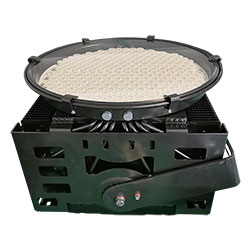
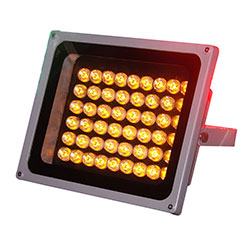
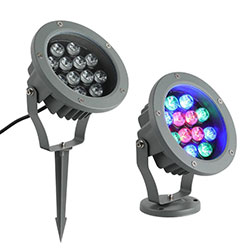
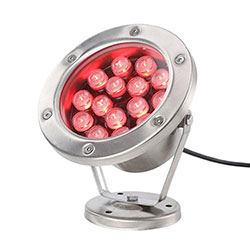
The design of lighting fixtures should harmonize with the historic architecture and reflect ethnic characteristics. At the same time, fixtures must be compact and discreet. The elegant spatial forms of historic buildings cannot tolerate bulky modern fixtures that are “eyesores”; therefore, ultra-narrow-beam floodlights, custom-made small fixtures, and eave lights are common choices.

5. Safety First: Fire Prevention, Waterproofing, Corrosion Protection, and Non-Destructive Installation
Most historic buildings are wooden structures and represent non-renewable cultural heritage. The safety of lighting equipment is the bottom line of design and must be the primary consideration. The National Cultural Heritage Administration has explicitly stipulated that “lighting fixtures must not be installed on historic buildings for ‘illumination projects.’” This is not a rejection of lighting design, but rather an emphasis on respect for cultural heritage—light fixtures must not be installed by drilling holes or driving nails into the building’s surface. Instead, installation should primarily rely on long-distance projection or independent mounting brackets to achieve the principle of “light visible, fixture hidden.”
Specific safety measures include: Using low-voltage LED light sources, which have low surface temperatures and can be installed close to wooden surfaces, offering good fire resistance; Electrical wiring must be protected by metal conduits and must not come into direct contact with wooden surfaces; floor-mounted fixtures must have a high waterproof rating. Additionally, light sources should minimize ultraviolet (UV) and infrared (IR) radiation to prevent UV radiation from causing the pigments in painted decorations to fade and to avoid IR thermal radiation from scorching and cracking the surfaces of oil-based painted decorations. LED light sources have inherent advantages in this regard, as they emit minimal radiation and heat, ensuring high safety.

6. Ease of Maintenance and Sustainable Management
Once lighting systems for historic buildings are put into use, they should be easy to maintain. Since frequent scaffolding setup for construction work is not advisable in historic buildings, lighting fixtures should be selected for their long service life and high reliability (for example, LED light sources have a theoretical lifespan of tens of thousands to one hundred thousand hours) to reduce the frequency of replacements. At the same time, the layout of wiring and fixtures should facilitate routine inspections and maintenance to avoid complications in future management. The concept of sustainable lighting should also be integrated throughout the design process. While ensuring the desired lighting effects, energy consumption should be minimized as much as possible to achieve green lighting, thereby enabling the sustainable development of historic buildings.

Conclusion
Landscape lighting for historic buildings is, at its core, a dialogue with history. Designers must interpret the architecture with reverence, craft light and shadow with professional skill, and strike a delicate balance between preservation and presentation. Only in this way can historic buildings, as night falls, “quietly stand guard and gently accompany” visitors, perpetuating their cultural charm that transcends time and space.