4 Lighting Methods in Landscape Design
Table of Contents
Introduction
In the field of landscape design, the expressive logic of daytime and nighttime is drastically different. Daytime relies on natural light to outline form, color, and texture, while nighttime depends entirely on artificial light to reconstruct space and evoke emotions. As an industry adage goes, “Nighttime scenery is the second face of a garden.” By rationally grasping the interplay of light and shadow, using greenery lighting and waterfront lighting as a base, and highlighting the main architectural lighting as the visual focal point, a layered and hierarchical application of lighting can create a magnificent and nuanced lighting effect throughout the entire scenic area at night. This hierarchical and functional design approach ultimately condenses into four core lighting methods in landscape lighting: accent lighting, work lighting, ambient lighting, and safety lighting. These are independent yet intertwined, and with the skillful combination of professional designers, they can create endless spatial experiences and emotional variations.

Accent Lighting
Accent lighting is directional lighting used to emphasize specific targets; its essence is the active guidance of visual attention. In landscape design, not all elements need to be evenly illuminated at night. Conversely, to imbue gardens with artistic charm, designers often choose to emphasize certain core elements or exquisite details at night using lighting—such as a gracefully shaped pine tree, a historically significant stone sculpture, a rhythmic feature wall, or a fountain and cascade in a water feature.
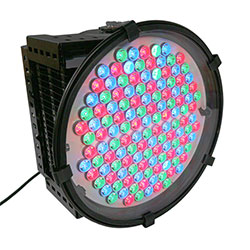
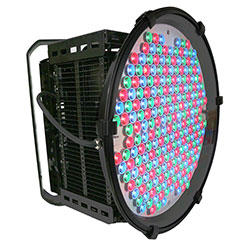
In terms of specific techniques, accent lighting typically uses highly directional lighting fixtures (such as narrow-beam floodlights, spotlights, or track lights) to precisely project light onto the target object, providing it with appropriate illumination, while the surrounding areas naturally recede into low light or darkness. This strong contrast of light and shadow not only highlights the aspects the designer intends to express but also creates a dramatic and narrative landscape effect. There’s an industry adage: “Using light is like using a pen; highlighting key elements is like the key to the title.” A successful accent lighting design often becomes the memorable anchor point of the entire garden at night.
In actual engineering projects, the design of accent lighting requires special attention to three technical details. First, the installation location of the lighting fixtures should be carefully considered to avoid glare caused by direct light shining into the eyes of visitors. Second, it is recommended to use lighting fixtures with light shields, grilles, or honeycomb mesh, or choose miniaturized, easily concealable fixtures to minimize their impact on the daytime landscape. Third, for sculptures, architectural details, and other objects with complex three-dimensional forms, it is suggested to use multi-point, multi-angle lighting to highlight their volume and material texture, rather than simply “frontal illumination.” Furthermore, the choice of color temperature is also crucial: warm light (2700K-3000K) is suitable for highlighting warm, heavy materials such as wood, stone, and antique-style buildings; cool light (4000K-5000K) is more suitable for modern stainless steel, glass, or water features, creating a cool, technological atmosphere.

Ambient Lighting
If accent lighting is the “main melody” in a musical piece, then ambient lighting is the “harmonious background” that runs throughout. Ambient lighting embodies two aspects: firstly, it serves as background light relative to accent lighting, providing a basic brightness level for the entire space; secondly, it supplements task lighting, bridging the gap between functional lighting and ambiance.
It’s important to clarify that ambient lighting is not specifically designed for any particular object or activity. Its core task is to provide supplemental light with the necessary brightness, allowing visitors to roughly perceive or clearly see the outlines of their surroundings as they move through the space. Therefore, ambient lighting should be soft, even, and diffused throughout the space, carrying a romantic, tranquil, or even mysterious atmosphere. From a professional design perspective, ambient lighting should deliberately avoid sharp light sources or glaring spots, striving instead for a “light without seeing the source” effect.
There are various technical means to achieve this goal. Common methods include projecting light onto uniform walls, large tree canopies, or light-colored paved surfaces, utilizing diffuse reflection to create soft, non-directional secondary light; ground lights (in-ground lights washing upwards onto walls or tree canopies), fiber optic lighting, flexible LED light strips, neon lights, or linear floodlights washing the ceiling, creating diffused light filling a specific area. In large gardens or waterfront landscapes, ambient lighting can also be achieved through low-lying pillar lights or lawn lights placed along paths, providing the necessary brightness for pedestrian safety without disrupting the overall aesthetic of the night sky. It is important to note that the illuminance of ambient lighting should not be too high—according to CIE (International Commission on Illumination) guidelines, the average illuminance of ambient lighting in green spaces is typically controlled between 5 and 20 lux, depending on the site’s classification and surrounding light pollution restrictions. Excessively bright ambient light weakens the dramatic effect of accent lighting and also wastes energy and causes light pollution.

Work Lighting
The main focus of park visits and sightseeing is “people,” and people’s nighttime activities require sufficient and reliable lighting. Work lighting is designed for specific activities—for example, in outdoor dining areas, open-air theaters, children’s playgrounds, chess and card game areas, and outdoor yoga platforms within a garden, people need sufficient light to perform tasks such as reading, walking, operating tools, or identifying details.
Work lighting design has significantly different technical requirements from accent lighting and ambient lighting. First, the provided light should be glare-free. This means that the installation height, angle, and shading measures of the luminaires must be strictly calculated to prevent the light source from directly entering the field of vision (especially the horizontal line of sight when seated). Second, work lighting should have no shadows or minimize the hard edges of shadows to avoid interfering with fine motor activities. This is usually achieved by using surface light sources, multiple parallel light sources, or indirect lighting to ensure uniform light distribution in the activity area. Third, work lighting must consider convenient control of the light source—that is, it should be easily turned on or off when needed, and automatically turned off or dimmed when no one is present. This not only significantly saves energy, but more importantly, it restores the tranquility and serenity of the site when no one is around, preventing the negative impacts of “all-day high-brightness lighting” on the nighttime ecological environment and the psychology of visitors.
In practice, courtyard lights, courtyard pillar lights, low-mounted lawn lights, adjustable wall lights, and LED lights with sensor control are common work lighting devices. For outdoor dining or reading areas, adjustable pendant or pole-mounted lights can be considered, allowing users to control the direction and intensity of the light themselves. Meanwhile, a neutral white color temperature (3500K-4500K) is recommended for work lighting, ensuring a high color rendering index (Ra ≥ 80) without creating a sense of tension like cool white light or causing visual fatigue like warm yellow light. It is particularly important to emphasize that work lighting should not “intrude” into the core landscape area dominated by accent lighting; otherwise, it will dilute the spatial layers at night.

Safety Lighting
To ensure safety during nighttime park visits and sightseeing, dedicated or dual-purpose safety lighting is necessary in plazas, paths, watersides, steps, ramps, bridges, and boardwalks. This allows visitors to clearly see surrounding obstacles, boundaries, and potential hazards. Furthermore, appropriate lighting in areas prone to creating a sense of unease, such as corners, under trees, and narrow passages, can provide a psychological sense of security and effectively prevent crime (i.e., “natural surveillance” in the CPTED principle of “crime prevention through environmental design”).
The technical characteristics of safety lighting can be summarized in three points: continuity, uniformity, and basic luminance. Continuity means that there should be no dark areas or breaks in the main pedestrian flow, otherwise visual adaptation will be interrupted, increasing the risk of falls. Uniformity requires that the ratio of maximum to minimum illuminance within an area should not be too high (generally not exceeding 10:1), avoiding alternating “bright holes—dark pits” of stimulation. Regarding basic brightness, referring to the *Code for Design of Urban Nightscape Lighting* (JGJ/T 163-2008) and relevant international standards, the average illuminance of main garden paths should not be less than 5 lux, and secondary paths should not be less than 2 lux. High-risk areas such as steps and watersides should be increased to 10-15 lux or additional edge warning lighting should be added.
Safety lighting can exist as independent light sources—such as dedicated garden path lights, underwater light strips (to mark water boundaries), and in-ground lights along steps; it can also be used in combination with other lighting methods, such as using the residual light from work lighting to cover garden paths, or using reflected light from ambient lighting to indirectly illuminate steps. However, regardless of the form used, care must be taken to ensure that different lighting systems do not interfere with each other. Typical interference examples include: a strong beam of focused lighting passing directly across a visitor’s horizontal line of sight, creating a temporary glare blind spot; or colored dynamic lights (such as RGB color-changing lights) placed beside main walking paths, whose color switching can cause the human eye to misjudge height differences. Therefore, it is recommended that safety lighting use static, warm white, or neutral white light, avoiding highly saturated red and blue light, and especially avoiding flickering or abrupt effects.

Summary
In actual landscape lighting design projects, accent lighting, task lighting, ambient lighting, and safety lighting are not isolated systems, but rather an interwoven, collaborative network of light. Excellent designers understand how to adjust the “ratio” of these four elements in different areas and at different times. For example, in the early evening hours at the beginning of the park’s opening, task lighting and safety lighting should prioritize meeting the needs of visitors; as night falls, the intensity of task lighting can be appropriately reduced, while the softness of ambient lighting and the dramatic effect of accent lighting can be enhanced to create a tranquil and romantic nighttime landscape atmosphere. Furthermore, with the widespread adoption of intelligent lighting control systems (such as DMX512, DALI, or wireless self-organizing network systems), dynamic switching and scene presets between the four types of lighting have become industry standard practices.
The choice of lighting methods in landscape lighting design is not simply about “being bright enough,” nor is it about “the more dazzling the better.” It is a professional practice about the delicate balance between light and shadow, function and aesthetics, ecology and experience. For every practitioner in the lighting field, a deep understanding of the characteristics and applicable boundaries of these four basic methods, and the ability to flexibly apply and organically combine them in specific projects, is essential to truly give gardens a second life at night that is both safe and comfortable and artistically captivating.